




How to volumise hair: practical styling tips
Create temporary lift by raising roots as they dry, changing your part and adjusting conditioner placement. Styling changes appearance, not hair density.


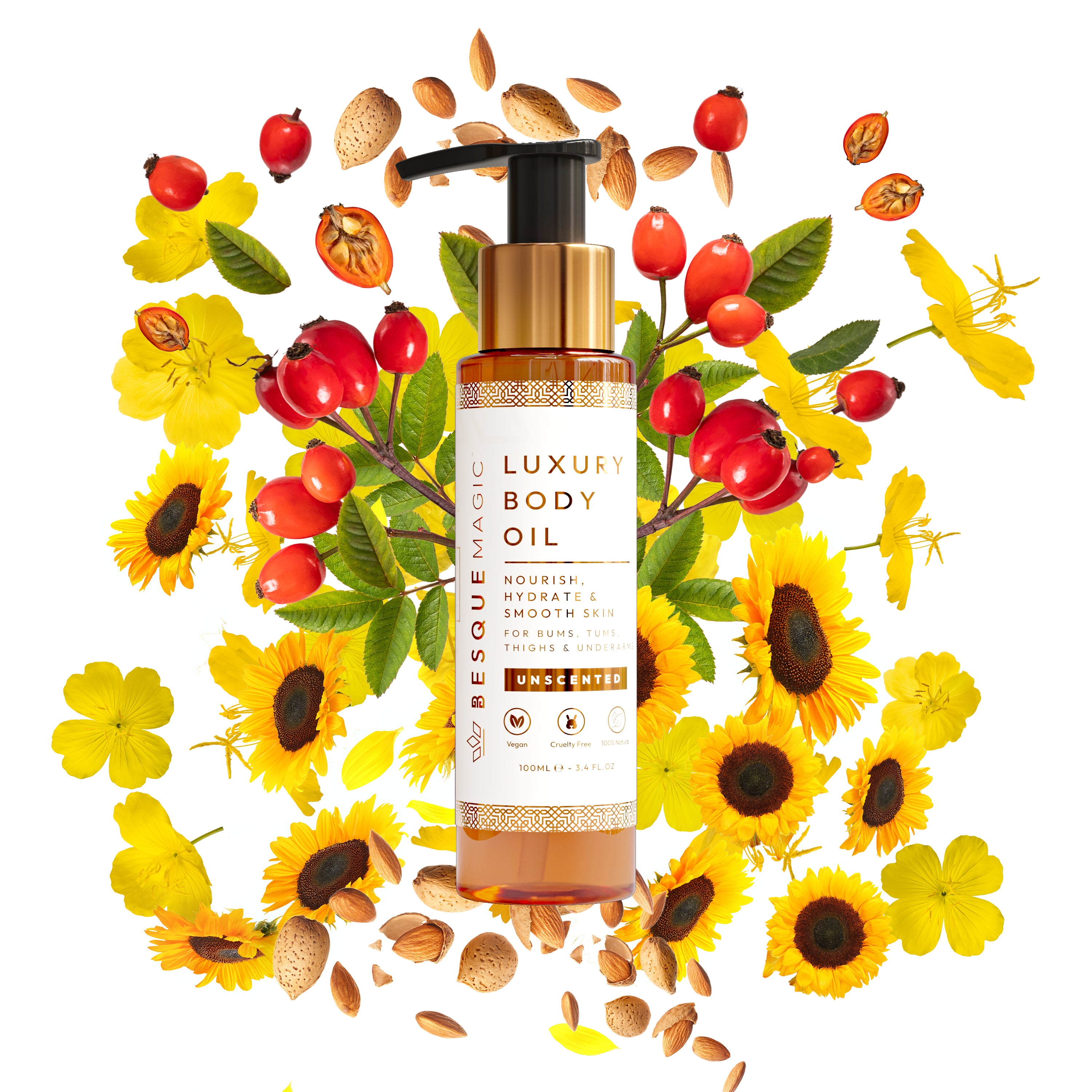
I am loving this oil, I’m seeing changes in my skin after only 30 days. I can’t wait to see the results after 90 days!
Dianne A.
Verified Customer


To keep curly hair from frizzing, focus on three practical things: conditioning the lengths, handling wet hair gently and letting curls dry with as little unnecessary disturbance as possible. Frizz can come from several routine factors, so changing every product at once rarely tells you what helped. A useful aim is to make curls feel more manageable and keep their shape more consistent, rather than expecting every strand to sit perfectly in every kind of weather.
Frizz is the appearance of loose or lifted strands around curls, or of curl groups looking less defined than you would like. It can happen alongside otherwise well-defined curls. It does not, on its own, tell you that your hair is damaged or that you are using the wrong curl routine.
Curly hair varies considerably. Some people have fine strands that lose their shape under heavy products; others have thicker, denser or coily hair that benefits from more conditioning slip during detangling. The curl pattern can also vary across one head. That is why a routine copied from someone with a similar-looking curl pattern might still leave your own hair feeling coated, dry or difficult to arrange.
The visible result is influenced by more than a product. How you detangle, how much you handle the lengths while they dry, and whether you use several products together can all affect the finish. Weather can matter too. A style that holds its definition in dry air may look different in humid conditions, even when you have not changed your routine.
You do not need to label your curls before you can care for them. Pay attention to what you can observe instead: whether your lengths tangle easily, whether a product leaves them feeling coated, and whether frizz appears during washing, drying or later in the day. Those clues point towards a useful adjustment.
If frizz is most noticeable after washing, start by looking at how you detangle and dry your hair. If curls lose definition as they dry, repeated touching or rough towel rubbing may be disrupting their arrangement. If your hair feels rough or catches on itself, consider whether the conditioner reaches the sections that need it and whether you are removing accumulated product and oil when you cleanse.
Frizz that appears later in the day calls for a different check. Humidity, contact with clothing, tying hair back and repeatedly touching curls can all change how a style looks. That does not mean you have to avoid normal activities. It helps to notice when the change occurs, so you can decide whether to adjust the wash routine, drying technique or way you refresh the style.
Look at the whole length as well as the most visible flyaways. If the ends feel especially dry or tangle more than the roots, they may need more conditioning attention than the scalp. If curls near the scalp feel heavy while the ends feel comfortable, the amount or placement of a leave-in product might be the more relevant variable.
Start with the moment frizz appears. The useful adjustment is often in the step just before it, not in adding another product at the end.
Shampoo and conditioner have different jobs. Shampoo cleanses, including accumulated oil and product residue. Conditioner helps hair feel easier to handle and can give you slip for detangling. You do not need to choose between cleansing and conditioning to care for curls.
When washing, focus shampoo on the scalp and let the rinse carry it through the lengths. Work with your fingertips rather than scrubbing the hair into a knot. How often you shampoo depends on your scalp, your routine and how much product builds up. If curls feel coated or the scalp feels uncomfortable, cleansing may be more useful than adding another layer of oil or styling product.
Spread conditioner through the lengths that need help with tangling or dryness. Concentrate on the areas that feel rough or catch together, rather than automatically applying the same amount everywhere. Give yourself time to work through knots while the hair has conditioner in it. Follow the product directions for how long to leave it on and whether it needs rinsing.
A rich-feeling product is not automatically the best choice for every curl. Fine hair or curls that quickly lose their shape might feel weighed down by too much conditioner. Drier lengths may need more coverage to make detangling comfortable. Use the feel of your hair after rinsing as a practical guide: it should be manageable, not coated in a way you dislike.
For curly or coily hair, detangling in manageable sections while the hair is wet and conditioned can help you work more gently. Begin at the ends, ease apart any knots, then move gradually towards the roots. If you meet resistance, pause and add more conditioner or water if that suits the product directions. Pulling a comb straight through a tight knot can put unnecessary strain on the strands.
You can use your fingers or a suitable wide-tooth comb. Fingers let you feel where a knot begins, while a comb can help distribute conditioner through a section. Choose whichever gives you better control, and avoid forcing a tool through tangles. Curly hair does not need to be brushed dry simply because a brush is part of someone else’s routine.
For dense curls, smaller sections can make the process easier to manage. If your hair is fine or tangles only in a few places, you may need less sectioning. The point is to work through the whole area without dragging one large mass of hair from root to end.
A simple wash sequence keeps the jobs distinct:
This sequence is a starting point, not a rule that every curl needs the same products or wash frequency. If your hair feels clean and detangles comfortably, adding a mask or extra conditioning step may not improve the result. If it still catches, look first at coverage and technique rather than pulling harder.
A routine does not need a long chain of products. Each item should have a clear role, and its format should match how you want to use it.
| Product format | Main role in a routine | What to consider |
|---|---|---|
| Shampoo | Cleanses the scalp and removes accumulated oil or product residue | Focus application on the scalp and use a frequency that suits your scalp and routine |
| Rinse-off conditioner | Conditions the lengths and helps with detangling | Apply where you need slip, then follow its rinsing directions |
| Leave-in conditioner or styling product | Remains in the hair or helps shape a style, depending on its purpose | Check whether it is intended for conditioning, hold or another specific use |
| Hair oil | Conditions hair according to the product’s directions | Check whether it is a pre-wash or leave-on product before deciding where it belongs |
These formats are not interchangeable. A rinse-off conditioner is not automatically replaced by a hair oil, and an oil is not automatically a styling product. If you use a leave-in product and a styler, apply them as their labels direct. You can begin with a small amount of each and distribute it through the sections that need it, rather than coating the hair all at once.
Changing one product or placement at a time makes the result easier to interpret. If you add a conditioner, leave-in, oil and gel at once, you may not know which one left your hair soft, weighed down or harder to arrange. A simpler routine also makes it easier to spot product residue that needs to be washed out.
Rubbing hair briskly with a towel can disturb the arrangement of curls and make the lengths harder to manage. After washing, gently press or blot the hair with a soft towel or cotton fabric to remove excess water. Work along the lengths rather than twisting them tightly into a towel.
Handle wet curls with care because knots are easier to pull when the hair is saturated. If you need to move the hair into place, use your hands gently and keep the sections together as much as possible. You do not need to squeeze every last drop of water out before styling. The amount of water that feels comfortable to work with depends on your hair and the directions for any product you plan to use.
If you apply a styling product, divide the hair into sections that you can reach easily. Smooth or scrunch it through according to the product’s purpose and instructions. Avoid repeatedly raking your hands through curls once you have arranged them. Each pass can separate sections that you wanted to keep together.
Air-drying avoids appliance heat, but it does not suit every schedule or give every person the finish they want. If you use a hairdryer, follow its instructions and avoid keeping hot air fixed on one spot. A diffuser attachment can help you direct airflow around curls, though the result still depends on how you use it and how your hair responds.
Use a lower appliance setting if that is suitable for your dryer and hair, and keep heat exposure to a minimum. If you regularly use heated styling tools, choose a separate product that is explicitly labelled for heat protection. An oil is not a heat protectant simply because it coats the hair, and you should not assume that any conditioning product has this function unless its instructions say so. Besque’s guide to heat-damaged hair explains what routine care can and cannot do.
Drying takes patience, but constant handling is not required. Once the hair is arranged, let it dry without repeatedly pulling curls apart to check them. If you need to move around or do other tasks, you can leave it alone and return when it is dry. The practical sign to look for is whether the curls feel dry enough to handle without flattening the shape you have just formed.
A full wash is not the only way to respond when a few curls lose their shape. You can dampen the sections that need attention and gently rearrange them, rather than wetting the whole head. If you use a refresher or styling product, check whether it is intended for use on dry or damp hair.
Apply a product to a section, not just to the visible flyaway on top, when the surrounding curl also needs reshaping. Use your fingers to group the strands back into the shape you want, then leave them to dry. Adding several products on top of one another can leave the hair coated, so start with the smallest routine adjustment that addresses the problem.
Between washes, a loose and comfortable arrangement for curls can reduce disturbance while you sleep. It is an option, not a requirement, and it should not pull tightly at the hair. If you wake with flattened sections, lightly dampening those sections and reshaping them may be more practical than starting the whole wash routine again. Besque’s VeganSilk Hair Sleep Wrap page explains how to wear it.
When refreshing curls, work on the sections that have changed. Rewetting and restyling the entire head can create extra handling without helping the parts that already look as you want.
A hair oil can be part of conditioning care, but its directions determine how to use it. Some hair products stay in the hair; others are intended to be washed out. Do not treat a scalp and hair oil as a daily finishing serum unless its directions say that is how it should be used.
Besque’s Instant Anti-Frizz Hair Oil is positioned for frizz management and a smoother, more manageable feel. Its reviewed directions describe applying it to the scalp and hair lengths twice weekly with gentle massage, then washing it out after two hours. Overnight use is given as an option. Follow the current label for the product you have, and do not assume that leaving it on longer produces a better finish.
This makes it a different step from styling wet curls for the day. If your immediate difficulty is keeping a particular curl arrangement in place, check the directions of a styling product designed for that purpose. If you are looking for an oil-based conditioning step, decide whether the wash-out directions fit your routine and whether you are comfortable cleansing afterwards. Besque’s Revitalise Hair Oil page includes its ingredients and use directions.
Hair oils do not repair split ends permanently or change the number of hairs growing from the scalp. Their cosmetic role is about the feel and manageability of existing hair. If your goal is to make curls easier to handle, that can still be a useful reason to include an oil, provided the format and directions suit you.
Follow the product’s directions for where to apply it. If a hair oil is intended for both scalp and lengths, keep the massage gentle and spread the product through the stated areas. Avoid adding more simply because the first application did not immediately change the appearance of dry curls. A coated finish can make it harder to judge whether the amount and placement work for you.
If you are new to a product, follow its label’s small-area test guidance where relevant. A small-area check does not guarantee that a product will suit you everywhere. Stop using it if it causes irritation. Natural ingredients do not guarantee that everyone will tolerate a formula, and people with a known allergy should check the complete current ingredients before use.
Look at how much tension and friction the hair meets. If you are working through large sections, split them into smaller ones and start at the ends. If towel rubbing is part of the routine, switch to gentle blotting. If your curls look less defined after repeated touching, arrange them once and leave them to dry before assessing the finish.
Also check whether the lengths have enough conditioner for you to detangle without pulling. If they do not, adjust the conditioner’s placement or choose a product that gives you better slip, following its directions. A change in technique can matter more than adding another finishing product.
Consider the total amount of product left in the hair, including oil, leave-in conditioner and styling products. Adding another layer can make the coating more noticeable. At the next wash, cleanse the scalp and rinse thoroughly, then use fewer leave-in layers or keep them to the sections that need them. Change one part at a time so you can see whether the finish improves.
If the scalp feels coated as well, think about cleansing rather than trying to cover the feeling with more oil. Shampoo removes accumulated oil and product residue. The right frequency is individual, so use the scalp’s comfort and the amount of residue as practical cues instead of following a fixed schedule meant for everyone.
A familiar routine can give a different finish when the air is humid. That does not necessarily mean your hair has changed or that you need to replace every product. Try to keep the washing and handling steps consistent, then adjust how you style or refresh curls if the usual arrangement does not hold as well.
Avoid assuming that an oil will make curls humidity-proof. If you use a styling product for hold, choose one that is labelled for that purpose and use it as directed. On a humid day, it may also be more comfortable to choose a style that tolerates a softer or less uniform finish, rather than repeatedly adding product to chase the same result.
Long lengths and ends may need more attention during conditioning and detangling because they can be the areas that catch together most. Check whether conditioner reaches them and whether you are pulling through knots at the tips. Handle those sections gently and spread any leave-in product only as its instructions allow.
Conditioning can improve the feel and manageability of existing hair, but it does not permanently join split ends or reverse damage to the hair shaft. If the ends continue to snag, a hair professional can advise whether a trim is appropriate. That is a practical option for difficult ends, not a requirement for every curly-haired person.
A useful troubleshooting note can be brief. Record when frizz appears, what you changed and how your hair felt afterwards. You might notice, for example, that the change follows towel drying, a new leave-in product or a humid day. The point is not to measure a perfect result, but to avoid making several changes that leave you unsure what suited your hair.
Start with the step closest to when frizz appears. If it happens while detangling, improve slip and work in smaller sections. If it happens during drying, reduce rubbing and handling. If the hair feels coated, review the amount and number of leave-in products before adding another one. Conditioning, gentle handling and a drying method you can control are the foundations; a hair oil is an optional, separate step with its own directions.
If you are considering a Besque hair oil, check its current product information for use directions and complete ingredients, especially if you have a known allergy. Then make one change at a time and judge the result by whether your curls feel easier to handle and look closer to the finish you prefer.
You do not need to brush dry curls if doing so separates the curl groups or creates more tangles for you. Detangle in manageable sections while the hair is wet and conditioned, using your fingers or a suitable comb and starting at the ends.
A hair oil can be part of conditioning care and may help the hair feel more manageable, but it is not a guaranteed way to prevent frizz or hold a style in humidity. Check whether the product is leave-in or intended to be washed out, and follow its directions.
Gently blot or press the lengths with a soft towel or cotton fabric instead of rubbing them. Air-dry or use a hairdryer according to its instructions, limit unnecessary handling, and use a separate heat-protection product if you use heat and need that function.
Usually, start by identifying when the frizz appears and change one relevant step, such as detangling technique, towel handling or product placement. Changing several products at once makes it harder to tell what improved the feel or appearance of your curls.
The Alchemy of Beauty is a sacred trilogy for the woman who knows that beauty isn’t something you chase, it’s something you reveal.
Crafted for body, face, and hair, each formula in the collection is a masterpiece of intention: pure, unrefined oils drawn from the world’s most potent botanicals. Chosen not for trends, but for their timeless ability to restore, repair, and replenish.
From the softening hush of Magic Body Oil to the luminous renewal of the DIVINE9 Facial Serum, and the silken strength of our Enrich Hair Oil, this is sel-care that doesn’t ask you to be younger, only more you.
Ethically sourced, cold-pressed, and formulated with purpose. This collection is beauty in its most powerful form.
Because at this stage in life, beauty isn’t about transformation. It’s about coming home to yourself. Radiant, grounded, and gloriously alive.
This is the alchemy. This is your ritual.

